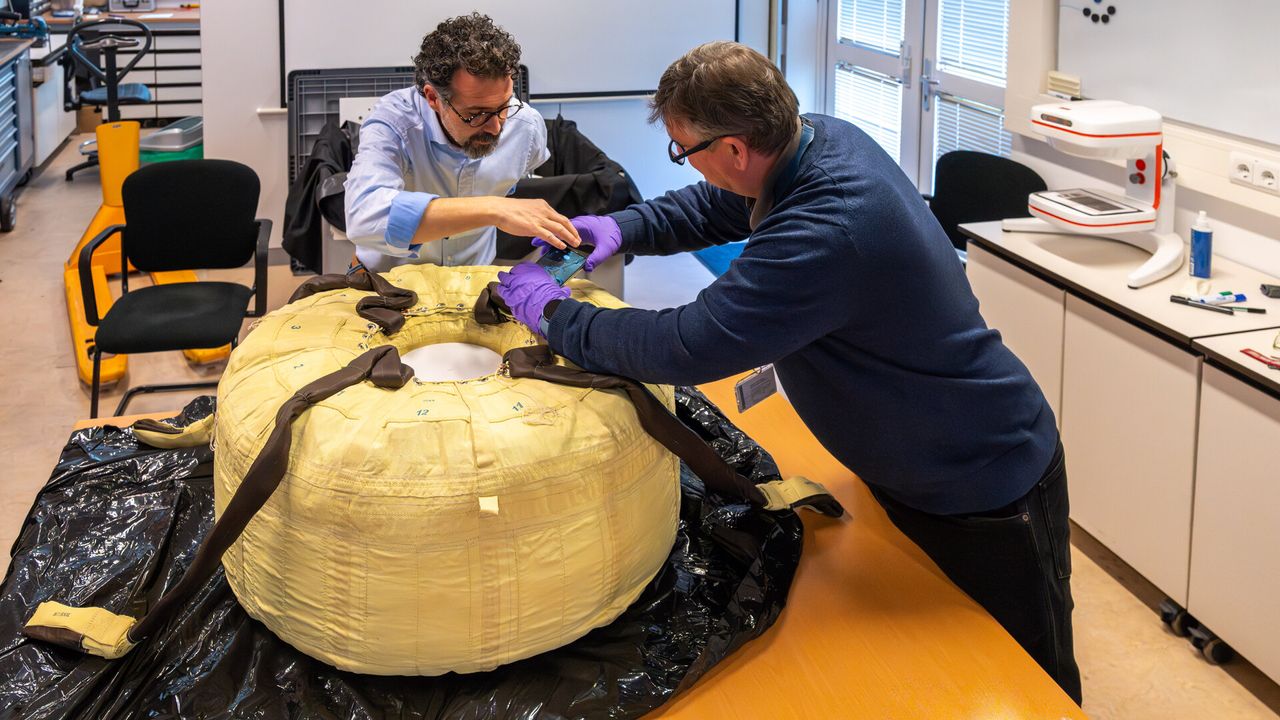
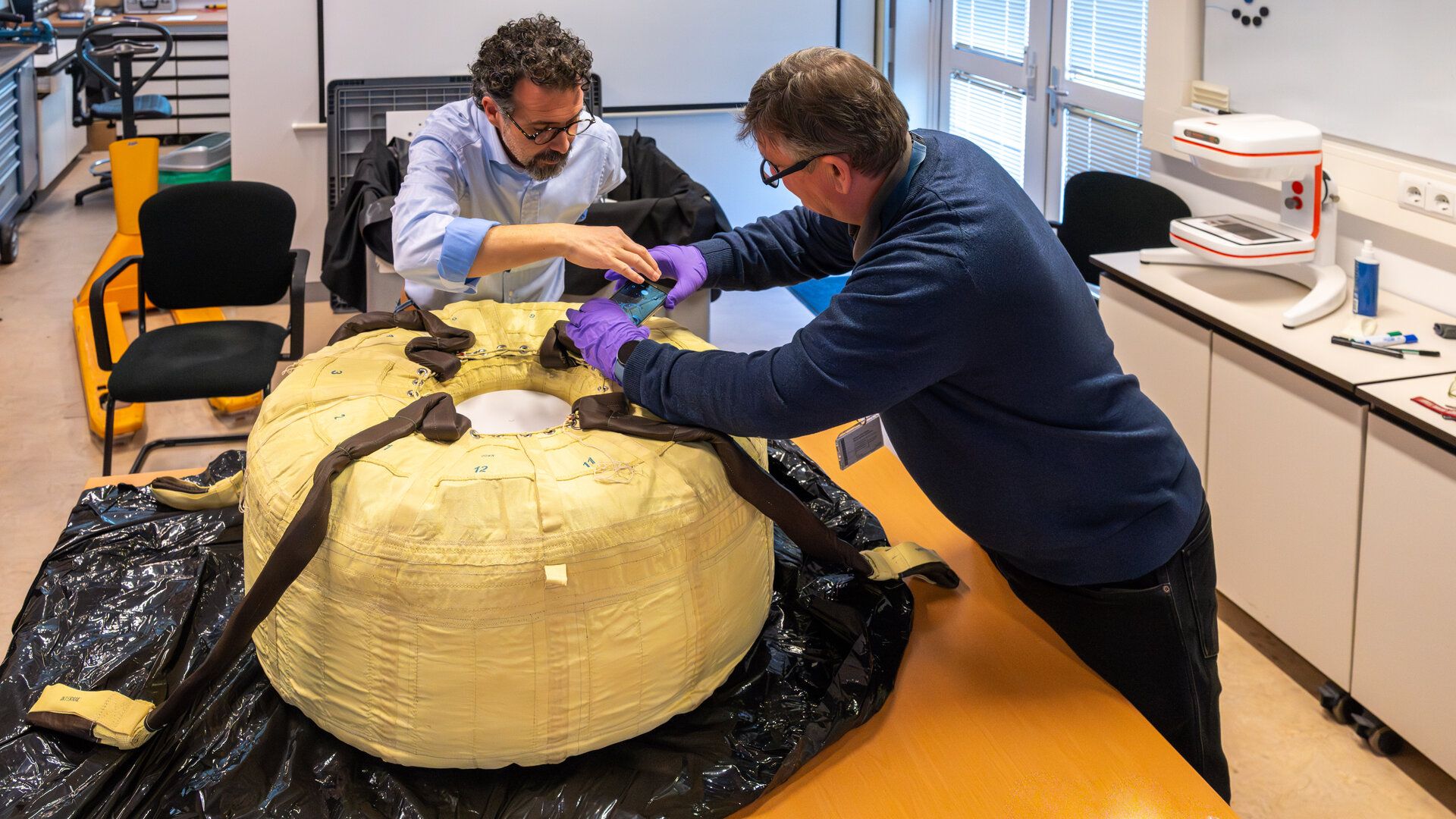
If you saw a recent space photo of a donut-shaped bag, you might think it's a cosmic confection. But look closer: nestled inside that padded ring is a massive parachute destined for the Red Planet. This isn't a treat—it's a critical piece of technology for future Mars missions. Below are ten things you need to know about this remarkable parachute, from its unique shape to its role in getting astronauts safely to the Martian surface.
1. What the Photo Actually Shows
The image, taken on May 1, 2026, captures a single stage of a supersonic parachute system packed inside a toroidal (donut-shaped) bag. The bag is designed to protect the parachute during launch and transit, then release it at the right moment during Mars entry. The photo was released as part of a series highlighting next-generation landing technologies.
2. Size and Scale
This parachute is enormous—its canopy, when fully deployed, spans roughly 25 meters in diameter. Compare that to the parachute used on the Perseverance rover, which was about 21 meters. The larger size helps decelerate heavier payloads essential for human missions.
3. The Donut Shape Serves a Purpose
The bag isn't just for looks. Its toroidal design evenly distributes the parachute's weight and minimizes stress during deployment. The open center allows the parachute to unfurl symmetrically, reducing the risk of tangling—critical when operating at supersonic speeds.
4. Material Science Magic
The parachute is woven from a blend of Kevlar, nylon, and advanced polymers. These materials can withstand extreme heat (up to 1,000°C) during atmospheric friction and the stretching forces of supersonic deployment. The fabric is also treated to resist UV radiation and Martian dust.
5. Testing in Earth's Skies
Before heading to Mars, this parachute underwent multiple test flights from high-altitude balloons and rocket sleds. Engineers simulated Martian atmospheric density (about 1% of Earth's) to ensure reliable opening. The test captured in the photo was one such successful trial.
6. It's Not a Single Parachute
This system actually comprises two stages: the donut bag contains the main parachute, but a smaller pilot chute (not visible) is deployed first to pull out the main. This tandem approach is standard for heavy payloads, as seen in the Mars Sample Return mission architecture.
7. Why It's Crucial for Mars Landing
Mars’ thin atmosphere makes parachutes less effective than on Earth. Supersonic parachutes like this one must slow the spacecraft from Mach 2 to subsonic speeds before retro-rockets can take over. Without it, landing heavy rovers or crewed vehicles would be impossible.
8. Lessons from Past Missions
NASA’s Pathfinder, Spirit, Opportunity, and Curiosity all used similar disk-gap-band designs. The donut-shaped bag concept improves upon these by allowing tighter packing and smoother deployment. The photo's parachute is a direct descendant of those proven designs.
9. Future Missions That Will Use It
The parachute is slated for the Mars Human Exploration Precursor program and possibly the Martian Sample Return lander. Engineers are also adapting it for potential Venus atmospheric probes and Titan entry missions.
10. The Next Stop is Mars
As the tagline says, 'Next stop? Mars.' If everything goes according to plan, this parachute will deploy in the Martian sky as early as 2030, helping safely land astronauts or returning samples. The donut bag, once a curiosity, will become a silent hero of interplanetary travel.
From its deceptive appearance as a snack to its life-saving function, this parachute represents the ingenuity behind human exploration. The next time you see a donut-shaped bag in space, remember: it's not cake—it's a ticket to the Red Planet.